Knights of the Air · Titel 3
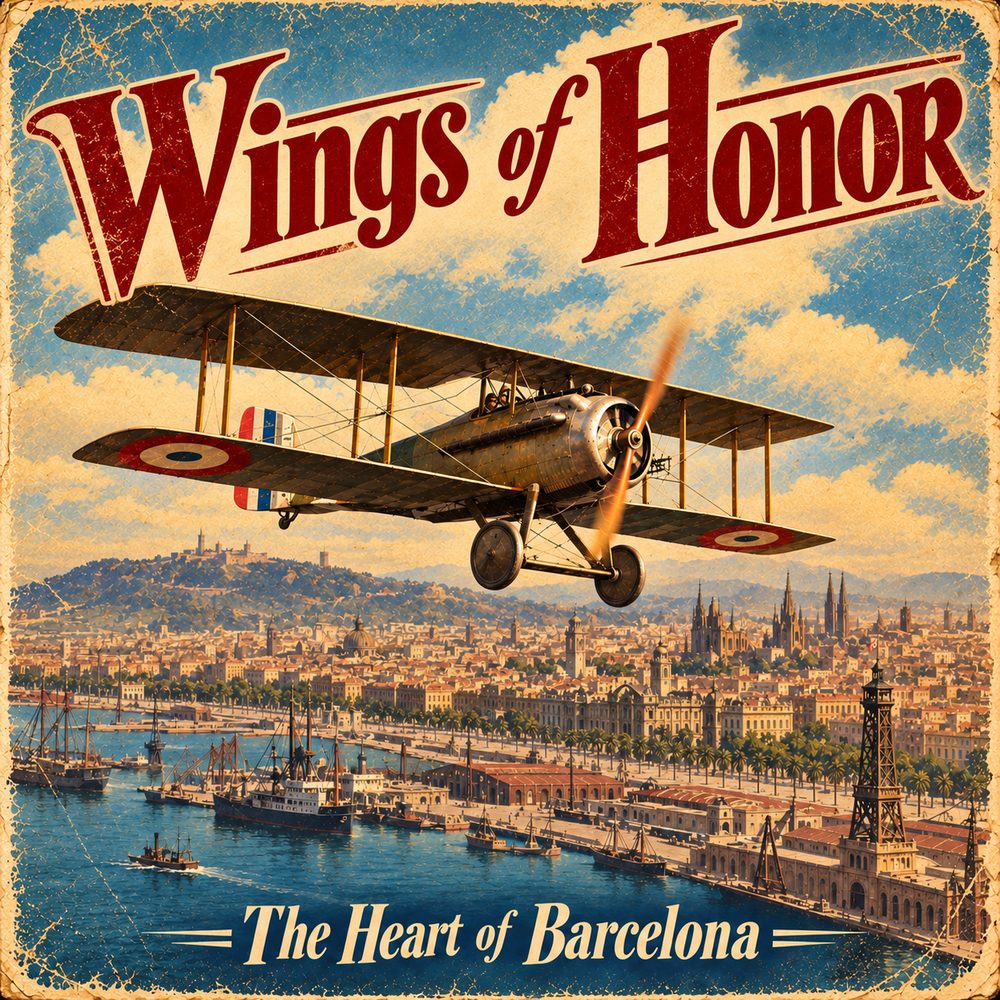
The Heart of Barcelona
Englisch · katalanische Version
Die Geschichte
Hispano-Suiza wurde 1904 in Barcelona gegründet. Der Name verbindet zwei Länder: Das Unternehmen war spanisch, sein Chefingenieur Marc Birkigt Schweizer. Birkigt machte sich zuerst mit Automobilen einen Namen, und als der Krieg begann, wandte er sich Flugmotoren zu.
Das Ergebnis war der Hispano-Suiza 8, der 1915 erschien. Es war ein V8 mit Aluminiumblock, leicht und leistungsstark für seine Zeit. Der französische Konstrukteur Louis Béchereau entwarf die SPAD VII um diesen Motor herum. Der Motor trieb auch die SPAD XIII, die Sopwith Dolphin und die S.E.5 an, einige der besten alliierten Jagdflugzeuge des Krieges.
Die Nachfrage war weit größer, als eine einzige Fabrik decken konnte. Fast 50.000 Stück wurden gebaut, aber nur 112 davon während des Krieges in Barcelona: Die übrigen entstanden in Lizenz in Frankreich und anderen Ländern, darunter Großbritannien, Italien und die Vereinigten Staaten.
Das Lied erzählt die Geschichte als Walzer, mit dem Motor als einem Herzen, geboren „beside the Mediterranean sea“. Dabei behält es die wahren Verhältnisse im Blick: Die meisten dieser Motoren wurden fern von Barcelona gebaut, aber der Entwurf, und der erste Motor, kamen von dort.
Liedtext · Englisch
The Heart of Barcelona
Verse 1In a city by the sea, where the mountains meet the shore,
A Swiss engineer had a dream and wanted something more.
Spanish and Swiss, the name on the door,
Hispano-Suiza, and a V that would roar.
Pre-ChorusEight small cylinders, light as a breath,
An aluminum heart that would outrun death.
ChorusHeart of Barcelona, beating in the sky,
Eight cylinders singing as the fighters fly!
Heart of Barcelona, strong and free,
Born beside the Mediterranean sea.
Verse 2Nineteen fifteen, and the first one ran,
A fighter was drawn around the plan.
SPAD took the engine and the sky took fire,
And Allied pilots climbed a little higher.
Pre-ChorusEight small cylinders, light as a breath,
An aluminum heart that would outrun death.
ChorusHeart of Barcelona, beating in the sky,
Eight cylinders singing as the fighters fly!
Heart of Barcelona, strong and free,
Born beside the Mediterranean sea.
Verse 3From Paris to London, from Turin to the West,
Licences crossed the sea to build the best.
Nearly fifty thousand hearts were made,
But the first one beat where the first plans were laid.
BridgeUnder French wings, under British too,
The same Barcelona heartbeat carried them through.
Final ChorusHeart of Barcelona, beating in the sky,
Eight cylinders singing as the fighters fly!
Heart of Barcelona, strong and free,
Born beside the Mediterranean sea.
OutroBorn by the sea... beating still.
Liedtext · Katalanisch
The Heart of Barcelona (Catalan version)
Vers 1Entre Collserola i el mar, una fàbrica treballava,
un enginyer suís que un motor somiava.
Hispano-Suiza, dues terres,
i una V d'acer que rugirà.
Pre-tornadaVuit cilindres lleugers com un alè,
un cor d'alumini que venç l'aire.
TornadaCor de Barcelona, bategant al cel,
vuit cilindres canten quan les ales volen.
Cor de Barcelona, lliure i fort,
nascut vora el mar Mediterrani.
Vers 2Mil nou-cents quinze, ja arrenca,
un avió neix al seu voltant.
L'SPAD pren el motor, el cel s'encén,
els pilots aliats recuperen el cel.
Pre-tornadaVuit cilindres lleugers com un alè,
un cor d'alumini que venç l'aire.
TornadaCor de Barcelona, bategant al cel,
vuit cilindres canten quan les ales volen.
Cor de Barcelona, lliure i fort,
nascut vora el mar Mediterrani.
Vers 3De París a Londres, de Torí a l'Oest,
llicències que creuen el mar.
Gairebé cinquanta mil cors fets,
però el primer va néixer aquí.
PontAles franceses, ales angleses,
el mateix batec de Barcelona els va dur.
Tornada finalCor de Barcelona, bategant al cel,
vuit cilindres canten quan les ales volen.
Cor de Barcelona, lliure i fort,
nascut vora el mar Mediterrani.
OutroNascut al mar, bategant.